Sit at any sushi counter in Tokyo long enough, and you’ll overhear a chef say something his own teacher never had to: this fish isn’t always available anymore.
Omakase runs on a simple arrangement. The diner hands the decisions over to the chef, and the chef serves whatever is freshest that morning. For decades, that arrangement thrived on abundance. Now, however, it often rests on scarcity instead, and overfishing is a major reason.
Bluefin tuna and unagi (eel), two ingredients the format is built around, have both been pushed toward tighter quotas, higher prices and, in some kitchens, substitute species. The two fish are not in the same place, though. Pacific bluefin is recovering under stricter international management. Japanese eel mostly isn’t, at least not yet.
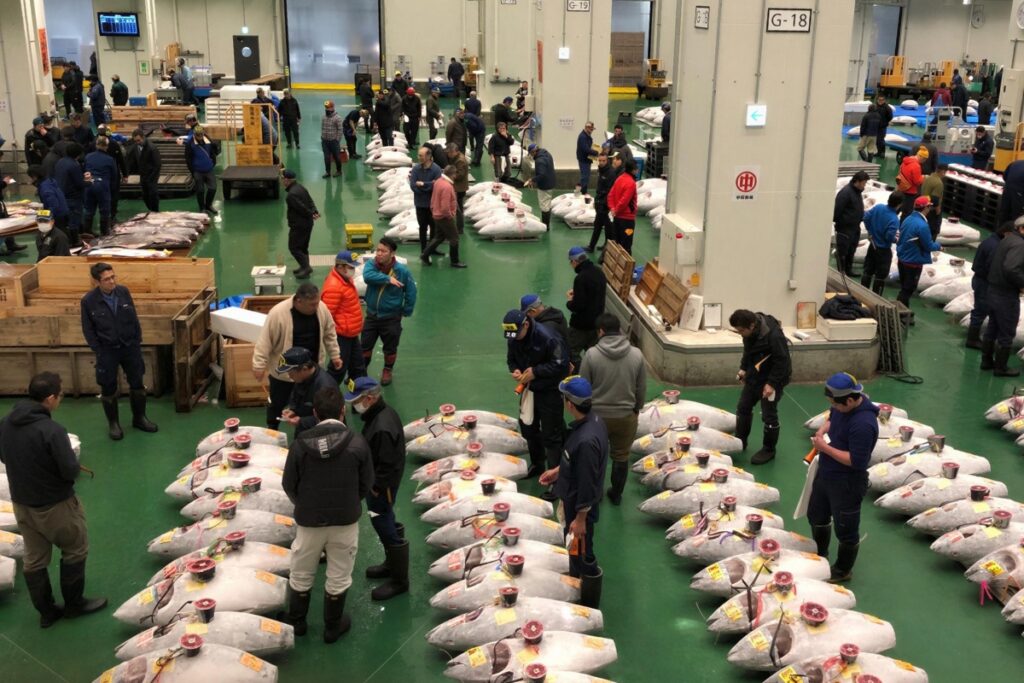
Pacific bluefin tuna’s unlikely comeback
No fish tells the recovery story better than Pacific bluefin, the prized cut behind otoro and the centerpiece of Tokyo’s New Year tuna auctions. A decade ago the numbers were bleak: stock assessments put Pacific bluefin at around 2% of its unfished, historical size. Japan, the United States, South Korea and other Pacific nations signed onto an international rebuilding plan in 2017 with binding catch quotas attached.
It worked faster than almost anyone expected. The stock hit its rebuilding target in 2021, and a 2024 benchmark assessment from the International Scientific Committee found the spawning population had climbed to roughly 23.2% of its unfished level — more than ten times the low point recorded around 2010.
Recovery hasn’t made the fish cheap, though. At Tokyo’s Toyosu Market on Jan. 5, a 243-kilogram bluefin caught off Oma, in northern Japan, sold for a record ¥510mn — about $3.2mn — to Kiyomura Corp., owner of the Sushi Zanmai chain. It broke company president Kiyoshi Kimura’s own previous record from 2019. Kimura told reporters after that “the price shot up before you knew it,” and said he still plans to sell nigiri from the fish at his usual counter prices — which puts a single piece somewhere in the range of ¥20,000 to 30,000 once the math is done on how many servings one tuna yields.
The bluefin bounce-back isn’t isolated, either. The International Seafood Sustainability Foundation’s January 2026 report found 74% of the world’s 23 major commercial tuna stocks now at healthy abundance levels, with none rated as overfished — the highest share the foundation has recorded. Bluefin, in short, may be the rare case where coordinated management actually reversed the damage.
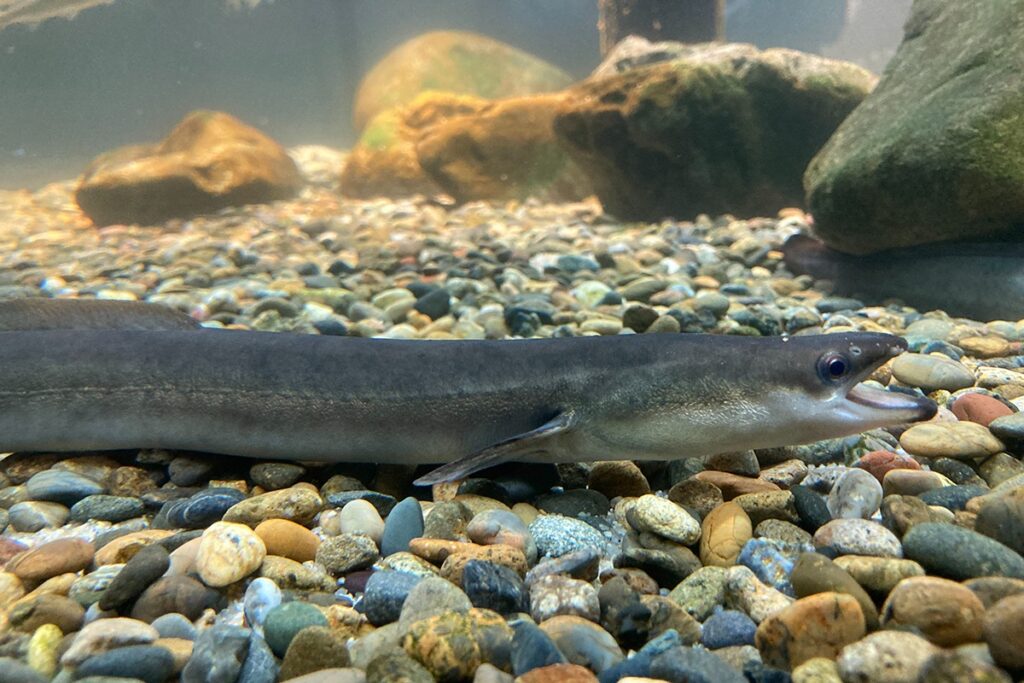
Why unagi is still Japan’s hardest sushi problem
Japanese eel haven’t turned the same corner. Populations have dropped more than 90% since the 1980s, squeezed by a combination of overfishing, river dams, pollution and habitat loss. Glass eel catches, which are the juveniles that stock every eel farm in the country, fell sharply between 2009 and 2012, and Japan’s Ministry of the Environment listed the species as endangered in 2013. Prices climbed for years afterward, from roughly 2,300 yen per kilogram in 2010 to more than 5,500 yen by 2023.
The politics haven’t helped. Member nations of CITES, the international wildlife trade treaty, voted down new trade protections for freshwater eels in late November 2025, meeting in Uzbekistan. Japan, the United States and China all opposed the listing, arguing existing national rules were sufficient; conservation groups called the protections overdue. Specialty unagi restaurants reported sales drops of 30% to 40% as prices rose, and some kitchens quietly began swapping in anago, the milder saltwater conger eel, when unagi ran short.
That price trend may be turning, at least temporarily. Bumper glass eel catches in 2024 and 2025, reportedly the largest haul in 19 years, pushed wholesale prices down sharply into 2026: domestic eel fell from about ¥5,307 per kilogram in April 2025 to roughly ¥2,983 a year later, according to Fisheries Agency data reported by News On Japan. Whether that holds, or whether it’s a one-year blip in a longer decline, is still an open question among wholesalers.
On the aquaculture side, Aeon began selling kabayaki made from fully farmed Japanese eel in trial batches starting May 29, 2026 — the first commercial product of its kind that skips wild-caught glass eels entirely. It’s still roughly three times more expensive than conventional farmed eel to produce, though production costs per fish have fallen from around ¥40,000 in 2016 to about ¥1,800 today as the technology has matured.
Rising water temperatures are squeezing uni, too
Overfishing rarely acts alone, and sea urchin makes that clearest. On Hokkaido’s Rishiri Island, a bowl with 100 grams of prized bafun uni now runs ¥15,000 to 18,000 — roughly double what it cost a few years ago, driven partly by catch declines tied to warming water. Restaurant owner Kimiko Sato, whose family has run a shop near the island’s ferry terminal for more than 50 years, said “everyone is shocked when they see the price.”
Water temperatures around Japan have risen roughly 5 degrees Celsius in recent decades, according to Shigeho Kakehi, a senior researcher at Japan’s Fisheries Research and Education Agency. Cold-water species that omakase counters lean on, such as salmon, squid and saury, have seen catch volumes drop sharply over the past 20 years, even as per-kilogram prices have climbed nearly fivefold. Layer that on top of decades of heavy fishing pressure, and the math for a lot of prized ingredients starts to look untenable.
How Japan’s sushi industry is adapting to scarcity
Japan tightened its own house first. Since 2018, the Fisheries Agency has required boats to report bluefin catch numbers directly, and violators now face up to three years in prison or fines of about ¥2mn — penalties that didn’t exist under the old rules.
Aquaculture is doing more of the heavy lifting than most diners realize, too. Farmed bluefin already supplies a meaningful share of the market, and the fully farmed eel product from Aeon suggests eel farming may eventually follow a similar path, even if cost remains a barrier for now.
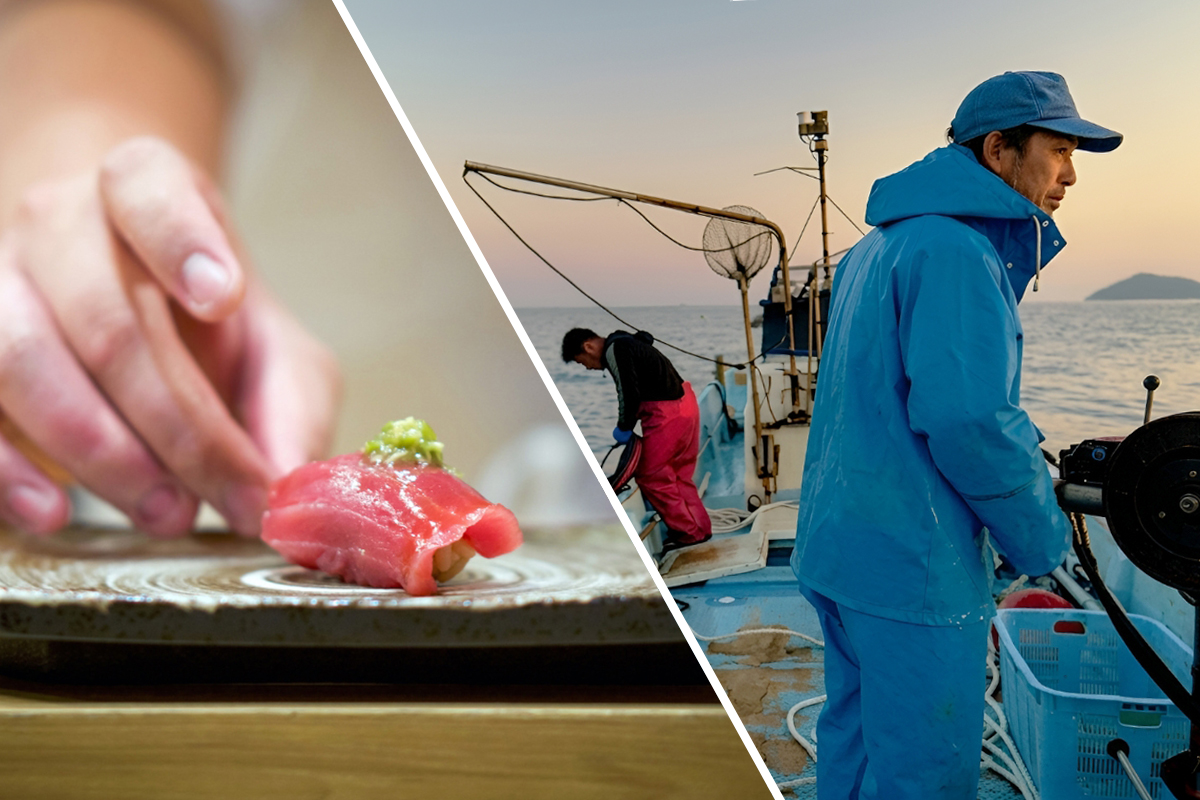
At the restaurant level, the shift shows up more quietly. More chefs are building direct relationships with individual fishing boats instead of buying blind through the wholesale market, which lets them trace exactly where a fish came from and how it was caught. A growing number are also folding “underutilized” fish — species that don’t traditionally show up on a nigiri board — into tasting courses as chef’s choice, which is arguably closer to what omakase was built for in the first place.
FAQs about sushi and overfishing
Is bluefin tuna still endangered?
Pacific bluefin was severely depleted around 2010 but has recovered to roughly 23.2% of its historical, unfished size under a 2017 international rebuilding plan. Current data shows no major tuna stock classified as overfished.
Why has unagi gotten so expensive?
Wild glass eel catches collapsed after 2009, Japan listed the species as endangered in 2013, and a November 2025 vote against new CITES trade protections kept international pressure on the trade in place — though a strong 2024–2025 catch has pushed wholesale prices down for now.
Will omakase keep getting pricier?
Likely yes for ingredients tied heavily to wild catch, though farmed alternatives for both tuna and eel are starting to soften that curve.
What can a diner actually do?
Ask the chef where the fish came from. The best omakase counters already track it, and most are glad to talk about it.
The fish on your plate tonight likely traveled further, cost more, and survived tighter regulation than the same cut would have a generation ago. Whether you’re a sushi lover or could pass the platter, the lesson omakase teaches is one that should concern you.