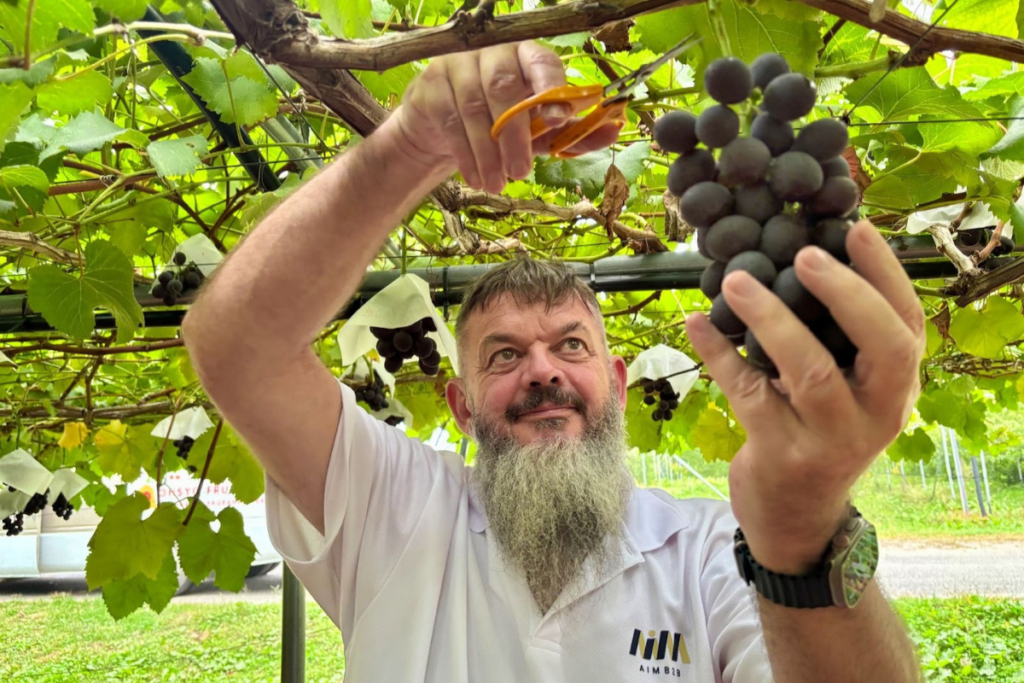
Katsunuma sits in a bowl of mountains west of Tokyo, and for more than 1,300 years its hillsides have grown grapes. Japanese tradition dates the arrival of the Koshu vine in the town in 718, though for most of that history nobody was making wine from it. The grape was a delicacy, not something to be fermented. It took the upheaval of the Meiji Restoration to change that.
From table fruit to table wine
Japan’s modern wine story starts in 1874, when winemaking with Koshu began in Yamanashi as officials pushed to build industries that could stand alongside the West. A year later, Hironori Yamada and Norihisa Takuma began early winemaking experiments in Kofu using borrowed sake equipment. Three years later, in 1877, the newly formed Dai-Nihon Yamanashi Wine Company sent two young men, Masanari Takano and Ryuken Tsuchiya, to Troyes in the Champagne region to learn the craft properly. They came home with technique but ran into a problem that would dog the industry for a century: Japanese drinkers didn’t particularly want the wine.
Sake and shochu held the market. Wine remained a curiosity, propped up in places by military demand (Yamagata produced wine during World War II largely to extract cream of tartar, a byproduct with industrial uses) and by regional development schemes rather than consumer appetite. Hokkaido’s town of Ikeda rebuilt its economy around grape growing after municipal bankruptcy in the 1960s. The “One Village, One Specialty” movement of the following decades pushed other prefectures to plant vines almost as an act of civic branding.
What kept Yamanashi at the center of it all was Koshu. The grape is believed to have reached Japan through ancient Eurasian grape routes and carries both European and East Asian genetic ancestry. Breeder Zenbei Kawakami added Muscat Bailey A to the domestic lineup in the 1920s, giving Japan a red grape suited to its wet, humid summers. Neither variety resembles anything grown in Bordeaux or Burgundy, and that has turned out to be both the industry’s handicap and its calling card.
Late reckoning with labeling
For decades, the words “domestic wine” on a Japanese label meant almost nothing. Producers could import bulk wine or concentrate from Chile or the United States, blend in a splash of Japanese-grown juice, bottle it in Yamanashi, and call it domestic. Consumers had no way to tell the difference between that and wine made entirely from Japanese grapes.
The National Tax Agency finally closed the loophole with labeling rules that took full effect on Oct. 30, 2018, creating the protected term “Japan Wine” for bottles made exclusively from grapes grown in the country. Generally, only wines meeting that bar can list a harvest region, grape variety or vintage year on the front label.
The numbers exposed just how small the category was. In 2017, “Japan Wine” accounted for roughly 4.8% of all wine consumed domestically. The rest was either fully imported or some version of the old blend-and-bottle approach. Two geographical indications, Yamanashi (designated in 2013) and Hokkaido (2018), now carry legal protection at home and, through Japan’s economic partnership agreement with the European Union, in EU member states as well. It is a small industry, and a young one in regulatory terms, trying to define itself honestly before it tries to sell itself abroad.
Wines worth arguing about
Red wine remains a harder sell. Muscat Bailey A makes an easy, fruity wine that rarely leaves Japan with much conviction behind it. Misawa’s own bet, planting Cabernet Franc and Cabernet Sauvignon on purpose-built drainage ridges after advice from her professors at Stellenbosch, looks like a more interesting long-term project, but it is early days yet. White wine, however, has proven its potential.
Top bottles defining Japan’s wine scene
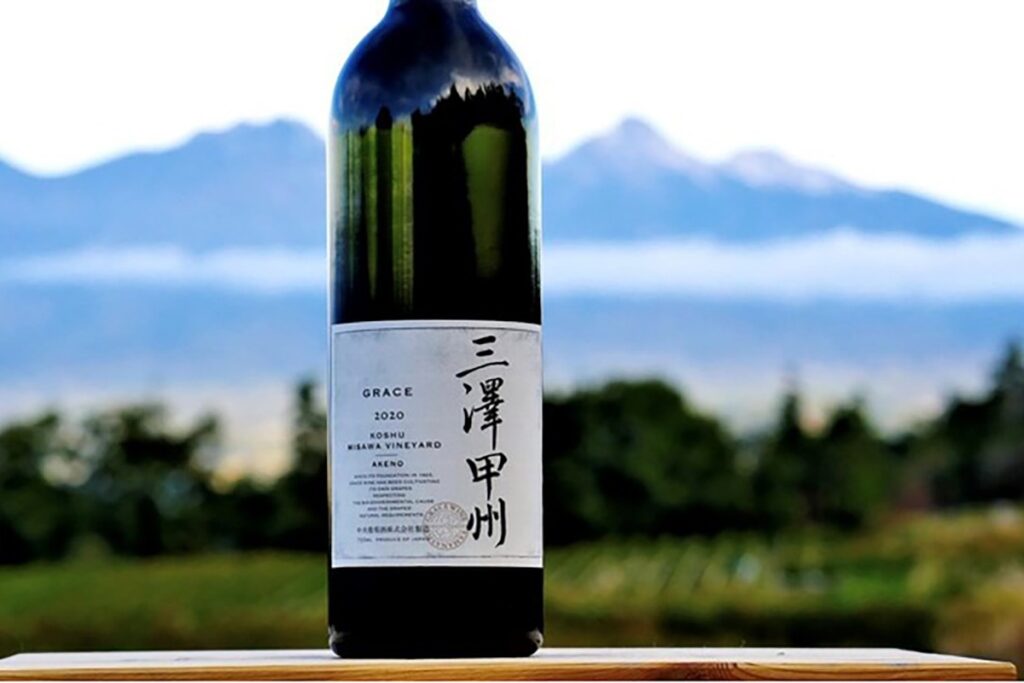
- Grace Wine (Katsunuma): The Misawa family’s estate, founded in 1923, was the first to showcase the quality of Japanese wine to the world. In 2014, it became the first Japanese producer to win a gold medal at the Decanter World Wine Awards. Winemaker Ayana Misawa’s 2016 Cuvée Misawa Akeno Koshu scored 98 points there the following year. Grown at 400 to 700 meters (1,300 to 2,300 feet) on hillside sites, it has a solid citrus-and-stone-fruit depth that ages past the decade mark. The standard Grace Koshu is a fair introduction, though slightly unambitious for a wine asked to represent the whole of Japan’s promise.
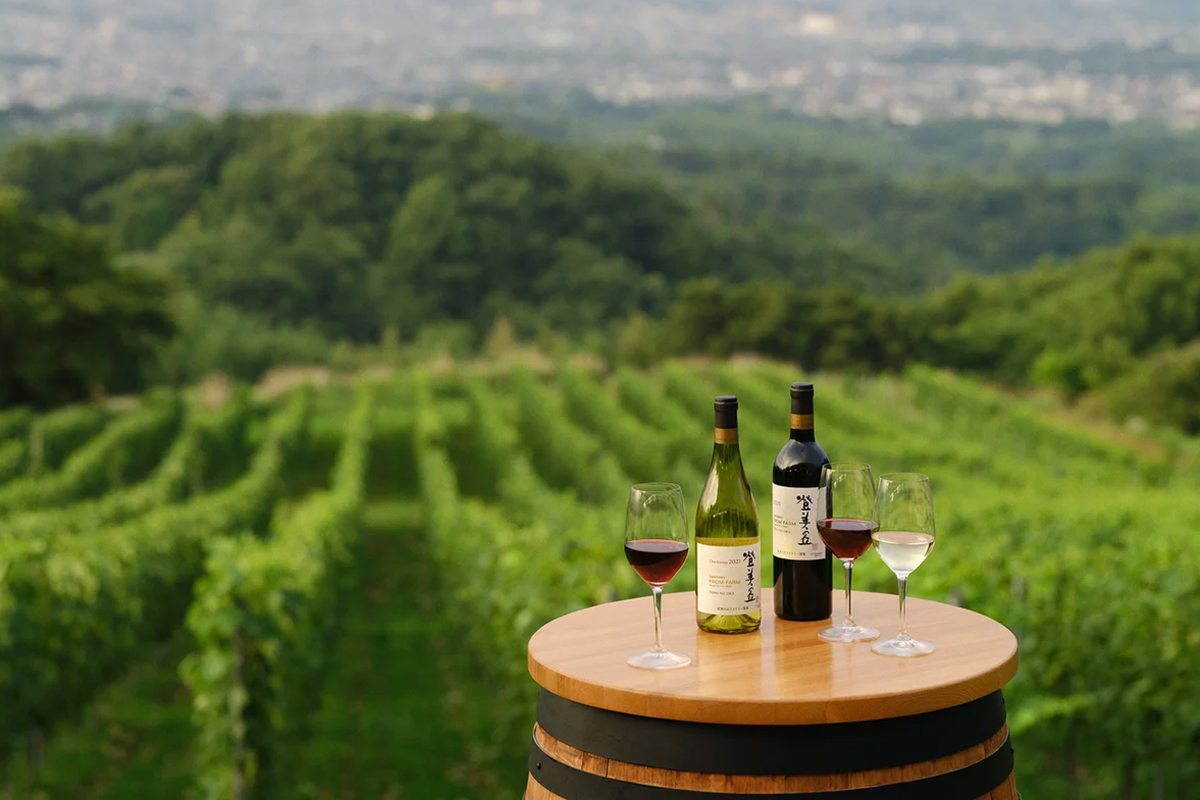
- Suntory From Farm Tomi Koshu 2022: This wine took the honors a step further, winning Best in Show at the 2024 Decanter awards—the first Japanese wine ever to do so. It is a well-made bottle, precise and mineral, though some critics might argue that the award also reflected Decanter’s desire to recognize Japan’s emerging wine scene.
- Katsunuma Jozo and Shirayuri Winery: Both scored gold medals at 95 points in the 2025 Decanter awards. Shirayuri’s L’Orient Vigne de Nakagawa bottling features bright green apple and lime, while the Katsunuma wine boasts a minty, tea-leaf finish that reads as obstinately Japanese rather than an attempt at Loire imitation.
- Chateau Mercian Kamoidera Syrah: Owned by Kirin, Chateau Mercian’s massive scale allows it to experiment with warm-climate varieties like Syrah and Tannat as the country’s summers grow hotter. While bigger production means less consistency across their range, this Syrah has real promise.
So can it compete?
On price and scarcity, yes—almost too well. The most premium Koshu from Grace or Kurambon costs what a good Chablis costs, sometimes more, for far smaller production runs and far less name recognition outside Japan. Restaurateurs serving Michelin-starred menus have started pouring these wines specifically because guests who already know Burgundy want something to talk about, according to industry sourcing. That is still a way of competing, even if it isn’t the mass-market kind.
On raw quality, the best examples hold up in blind tastings against serious white Burgundy and northern Rhône reds, and Decanter’s own judges have said as much with their scores. The catch is that “the best examples” is still a short list.
Behind Grace, Kurambon, Katsunuma Jozo and a handful of others, quality drops off fast. Japan’s aging farmer population and shrinking grape supply make it unlikely that the list will grow quickly. Japanese wine has proven it can win; it hasn’t yet proven it can supply enough of that winning wine to matter beyond a niche audience of collectors and sommeliers who already know to look for it.