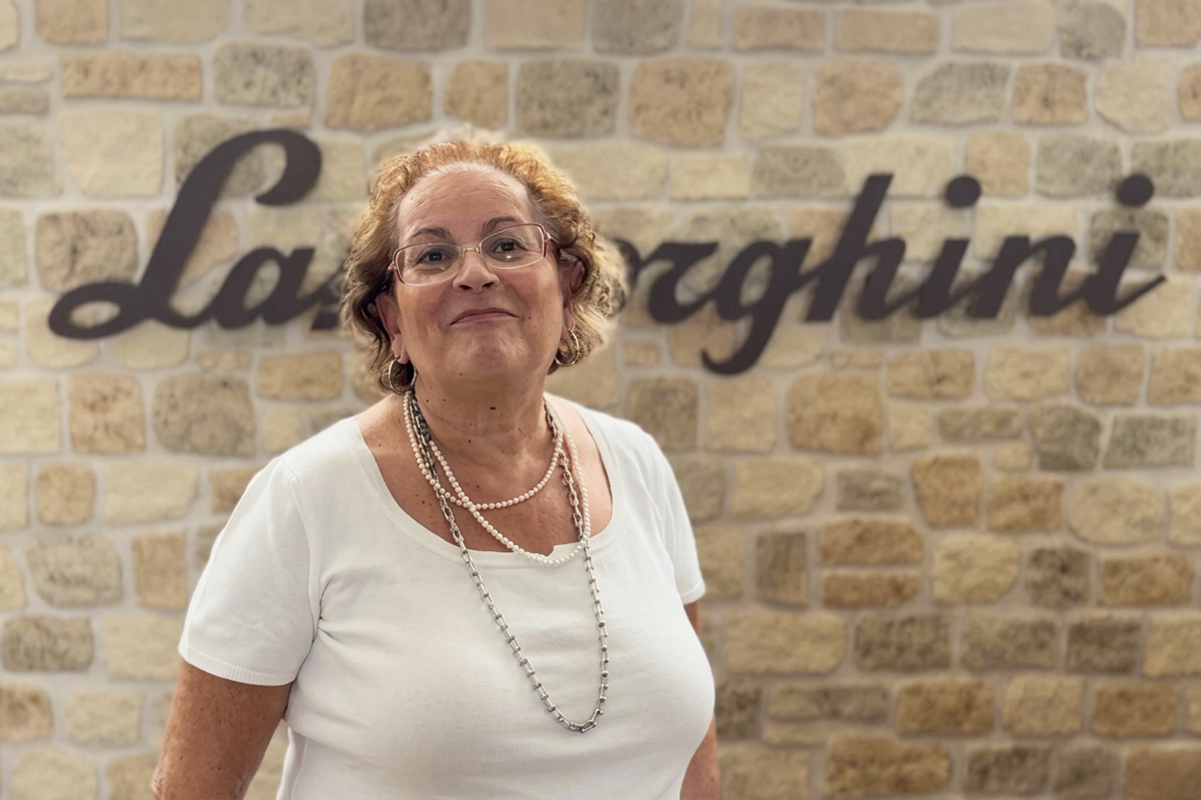

There is a story that the luxury world sees sometimes: the famous name attached to a product line, the logo doing most of the work. Lamborghini Wines has spent the better part of three decades proving that this is not that story. Sitting down with Silvio Tschang, the CEO, we learnt the full story behind the wine.
The winery was established in 1968 on an Umbrian estate personally chosen by Ferruccio Lamborghini, and it has been producing serious Italian wine ever since. Not famous-for-a-car-brand wine. Wine that has earned its own reputation, shaped by one of Italy’s most respected winemakers and driven by a production philosophy that most commercially minded estates would find ridiculous. The cars are easier to sell, probably. But the wine is the point.
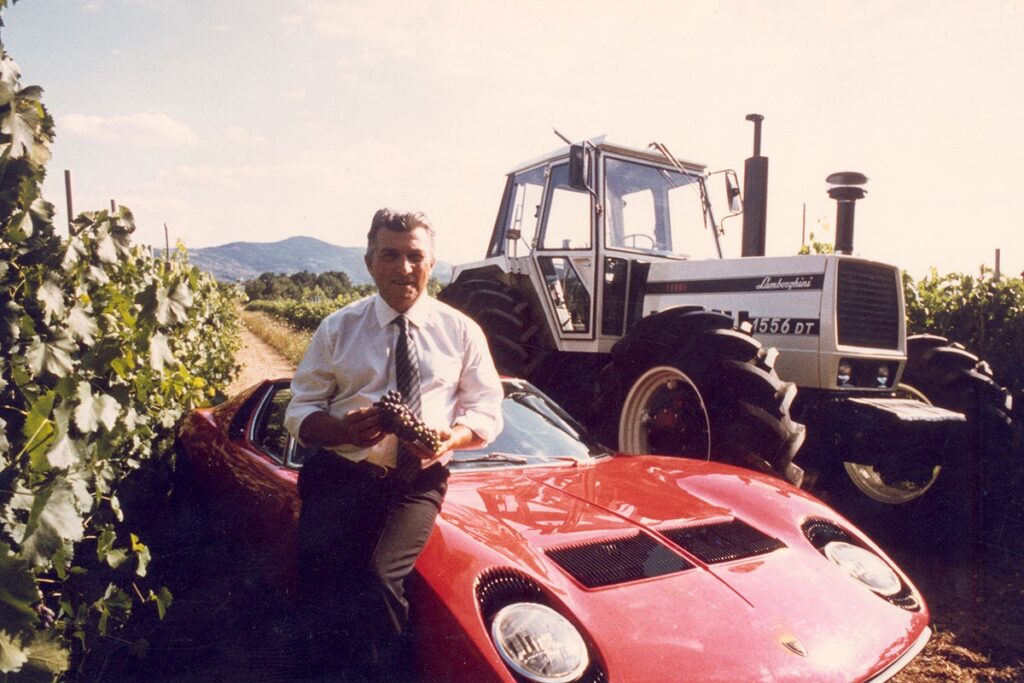
Ferruccio Lamborghini and the Estate He Called Home
The founding of the winery, simply written, is a story about a man who built an empire and then retired to return to his farm. Ferruccio Lamborghini made his journey through Umbria in 1968, at a time when his automotive company was already established and his reputation as an industrialist unquestionable. He found what he was looking for in one of central Italy’s least venerated regions: a landscape of ancient olive groves and volcanic soil a while away from the famous fields of Tuscany.
He established the estate and spent the final 23 years of his life there. He died on the property in 1993. For Ferruccio, the winery was home, and the wine it produced was held to the same standard of excellence that had defined everything he built.
Patrizia, Riccardo and a Two-Word Question
When Ferruccio passed away in 1992, his daughter Patrizia was 17. Naturally, her inheritance was complicated. It was an estate with real potential and a name that carried extraordinary weight, but no clear roadmap for what came next. Shortly afterward, she was introduced to Riccardo Cotarella, now widely acknowledged as the finest enologist in Italy, and the conversation that followed was decisive.
Cotarella asked Patrizia whether she wanted quality or quantity. She chose quality. He said he would need a new patch of 37 hectares. Not an additional 37, but a brand new lot, with the original one left fallow. She agreed to that as well.
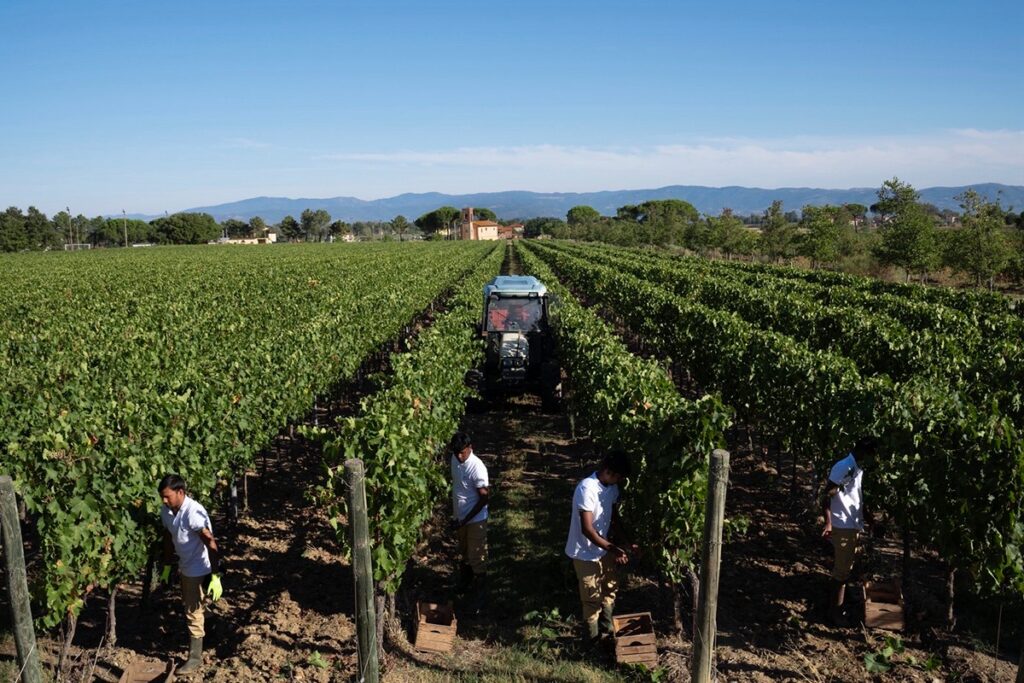
The results from the first harvest under this arrangement were, by multiple accounts, astonishing. And the founding logic has held ever since: the estate caps its yield at around 70 quintals per hectare, an amount that is significantly below what the land could be made to produce. Most commercial wineries wouldn’t entertain it. Lamborghini Wines considers it non-negotiable.
The decision to halve potential output was made by a teenager who had just lost her father, on the advice of a winemaker she had only just met. And yet it proved successful beyond what either of them could have imagined.
The Challenge of Bringing Italy to Italy
Silvio Tschang has been CEO of Lamborghini Wines since 2015. He arrived at the role through an unlikely route: an observation from his wife, while living in China, that he had never thought to import any. But his early experience in that market taught him something important. China at the time was full of people eager to trade on the Lamborghini name. What was harder to find was genuine appreciation for the wine itself. He walked away.
The Italian domestic market presented a different kind of resistance. Italian wine consumers are not easily impressed by brand heritage from another category, and the association with supercars created a skepticism that Tschang had to address directly. His approach was subtle: he arranged for a gift set to be placed in a friend’s store for one week, said nothing publicly about it and waited. He had expected to shift a few of the 5,000 units. Silvio’s friend called him three days later, and he remembers the phone call vividly.
“He told me that he wanted another 5,000 units. The original ones had all sold.” Silvio laughs
He is careful about what he took from this. It confirmed what he already believed: that a genuinely good product with a genuine story finds its market, but he did not take it as evidence that the work is done. The brand name might make viewers curious but if the wine is poor, curiosity is where the business ends.
Campoleone and the Making of the Wine
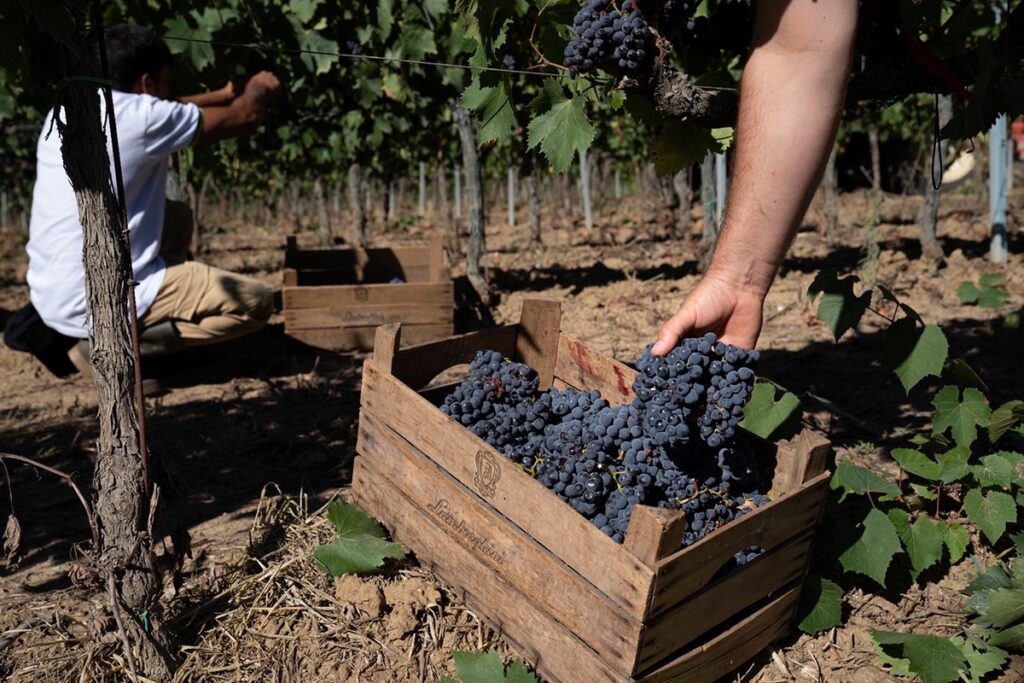
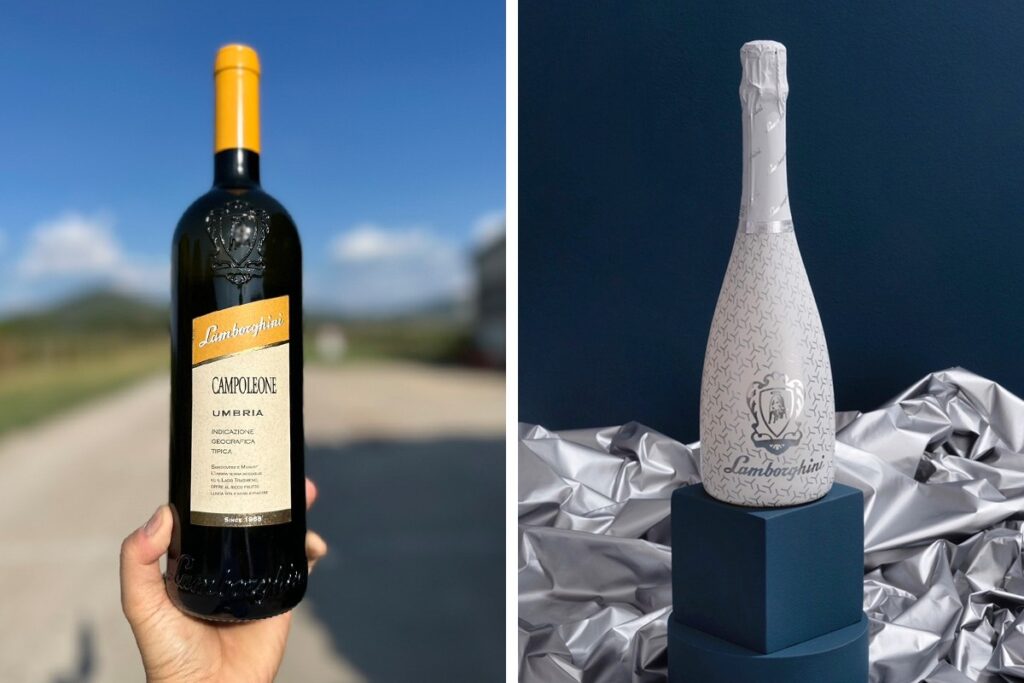
The flagship label, Campoleone, is Riccardo Cotarella’s expression of what the Umbrian estate is capable of. Cotarella is not a consultant who visits seasonally and approves a blend. He designs every aspect of the winemaking process, and his standards are exacting in ways that the yield figures make tangible: when one hectare of land is limited to 70 quintals, the fruit concentration and the quality of the resulting wine reflects that discipline.
Umbria tends to be discussed as Italy’s overlooked wine region, the landlocked alternative to its more famous neighbors. The Campoleone label has complicated that discussion with its quality.
The Octagonal Bottle: Designed for the Long Term
The newly released hand-crafted octagonal bottle that has become almost a byword for Lamborghini Wines generates the most immediate reaction, and it has been a top seller for long enough that it can no longer be described as a novelty.
The reasoning behind its design reflects the same logic that governs the rest of the operation. A Lamborghini automobile is an aspirational object for most of the people who admire it, as beautiful, precise and largely out of reach. The bottle occupies a different point on that spectrum: genuinely luxurious, made entirely by hand, and priced at a level that makes it a credible gift rather than a collector’s item.
Japan and the Long Game
The distribution partnership formalized with Mr. Satoshi in 2020 is not Lamborghini Wines’ first attempt at the Japanese market. There were earlier distributor relationships that ran their course. What the current arrangement represents is a careful approach: a recognition that Japan’s wine culture, which has been growing in both sophistication and volume for years, rewards producers who bring genuine substance rather than a recognizable label.
Tschang’s ambitions for Japan are specific. He wants to see Campoleone on the lists of the country’s finest restaurants: the environments where a sommelier can explain the founding story and where the wine’s quality can be understood in context. The premium nightlife sector has its own appeal, and the octagonal bottle translates well to that setting, but the fine dining placement is where the estate’s identity is most fully expressed.
Japan’s appetite for this kind of product is not coincidental. The country’s wine enthusiasts tend to be serious, their engagement with provenance and production philosophy genuine. It is, in that respect, a market that has more in common with the Umbrian estate’s own values than it might first appear: a culture in which the way something is made matters as much as the name on the label.
That connection is probably what makes Japan the right market for Lamborghini Wines at this point in the brand’s story. It isn’t the largest or the fastest-growing market. But it’s the one with consumers most likely to understand the story behind the bottle.