The Japanese sake market takes bold, innovative strides in the modern era. Whether it’s unique botanical infusions, urban microbrewing or even preparing the first stages in outer space, there’s always a vision of a new brew future in the minds of the premium brands.
But Takanome, the sake brand prized by high-end boutique diners, has chosen to ignore the future. Or at least, approach it from a new angle. This summer, the Yamaguchi-based luxury sake house Takanome announced its newest release: Takanome garden.
What makes Takanome garden special
Usually, the highest grades of sake are prized for transparency. Once pressed, brewers filter out the ori, which is a cloudy suspension of rice particles and yeast. Once removed, you’re left with the glass-clear liquid that is the hallmark of fine sake.
However, the Takanome garden turns its back on this tuned filtration process, instead choosing to create a style of sake known as origarami. Here, the ori stays, creating a rustic, unrefined finish. Takanome itself compares it to drinking fresh-pressed juice before anyone strains the pulp — a less controlled, but more faithful experience.
The reason behind this choice goes back to the name: garden. Takanome considers this bottle a step away from the metaphorical stage where perfection and performance are expected. Rather, it’s a return to your garden. Beautiful, serene, but also an intimate space where you do not need to be perfect, only yourself. The flavors captured in the bottle are that feeling of freedom in one sharp draught.

Tasting notes and brewing method
The resulting sake bursts on your tongue with a sharp, pineapple acidity. There are notes of grape sweetness and the slightly tart taste of a green apple. Underneath the volatile fruit flavors you find the notes of high-quality sake: the dense, almost umami body and an almost prickly effervescence.
Where does that complexity come from? It is brewed strictly with Yamada Nishiki rice grown in Yamaguchi Prefecture, often considered the “king of sake rice”. From there, it uses its own proprietary rice-polishing ratio — one of its most closely guarded secrets. And the finishing touch, skipping the filtration of the finished sake, seals in those interlaced flavors, as if fresh from the brewery tap. This isn’t a drink to let sit for months and years — drink it while those notes are still singing.
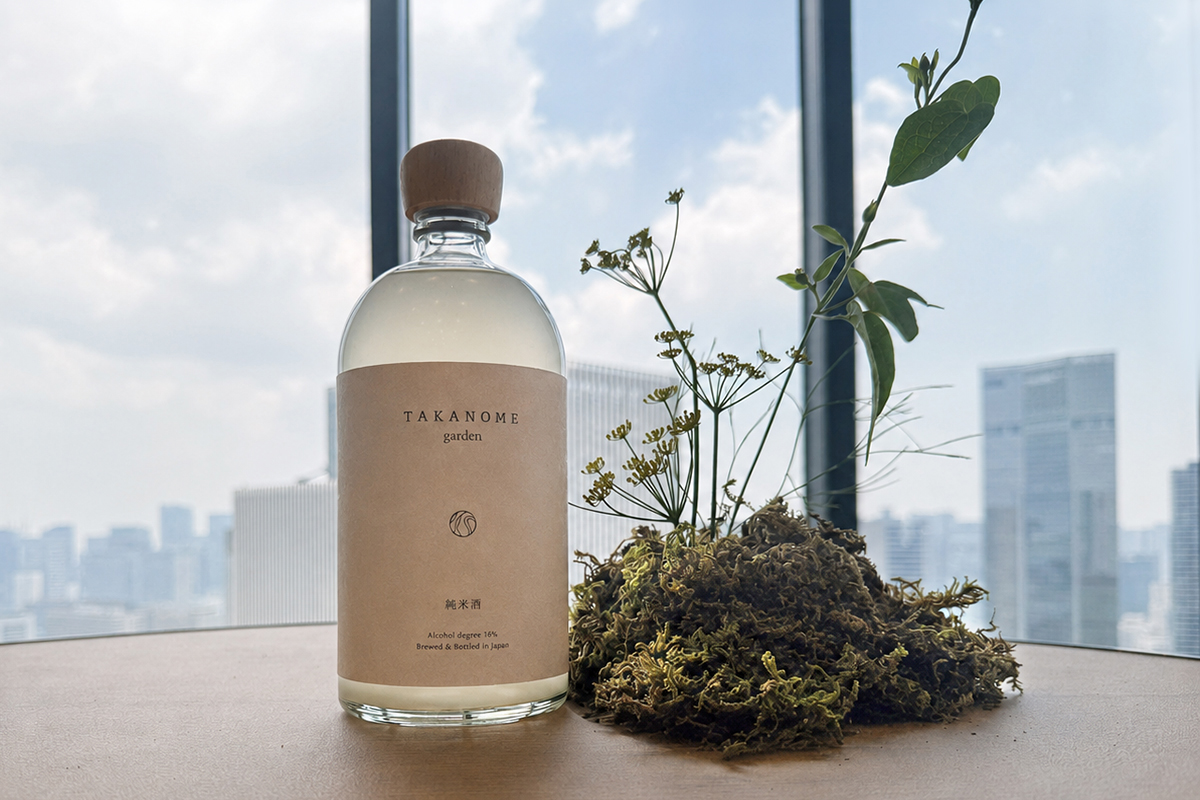
The glass bottle it is presented in only emphasizes the point. It’s bottled generously at 720 milliliters, and reads at 16% ABV, in a simple, elegantly profiled bottle. The label is a simple, almost parchment applique, with minimalist details. It all returns to the philosophy of Takanome garden: be authentic and don’t feel the urge to perform. The important part of the sake is the drink, not how it’s presented.
Prep and pair ideas
Takanome also provides several recommendations for savoring the sake and experiencing its fullest potential. With so much emphasis given to capturing the “freshly brewed” taste from the vat, it does not want a note to go missed:
- Drink it cold, between 5 C and 15 C. This makes sure the delicate top notes aren’t lost to your tongue adapting to the heat of a warmed cup.
- Use a wine glass or a shallow hira-sakazuki cup. Ideally, a glass that requires time and care to drink with, making sure each sip is a measured, careful journey through the aromas and flavors.
- Shake the bottle thoroughly before serving. The heavier ori will naturally settle at the bottom of the bottle as it is stored. Agitating ensures it is evenly distributed and each cup carries the same intensity.
- Serve with light accompaniments. Strong spices or alliums can completely overpower the more delicate parts of the sake. Takanome suggests eating it alongside a lightly seared scallop dressed with pineapple and white soy. A white fish carpaccio also worksno.

Where to buy Takanome garden
For all the high-end descriptions that describe Takanome, the most accurate would be boutique. The first concern of the brand is to ensure quality is never compromised for quantity. Takanome batches are prepared in small quantities, with new bottles being released on a strict schedule.
To procure one, check the Takanome garden website on the second Saturday and Sunday of every month at 9pm. With the limited stock, bottles can disappear in minutes, if not seconds, as high-end restaurants and private collectors race to purchase them.