Reservations are now being taken for Capella Kyoto, which will open on March 23 with the oldest address in the historic Miyagawa-cho district, “perpetuating a former elementary school site as a place of learning and cultural discovery.”
And in the first international expression of the three-Michelin-starred 32-seat restaurant, Capella Kyoto will host SingleThread by SoNoMa which “reimagines the intimate atmosphere of a traditional machiya teahouse for the present day.”
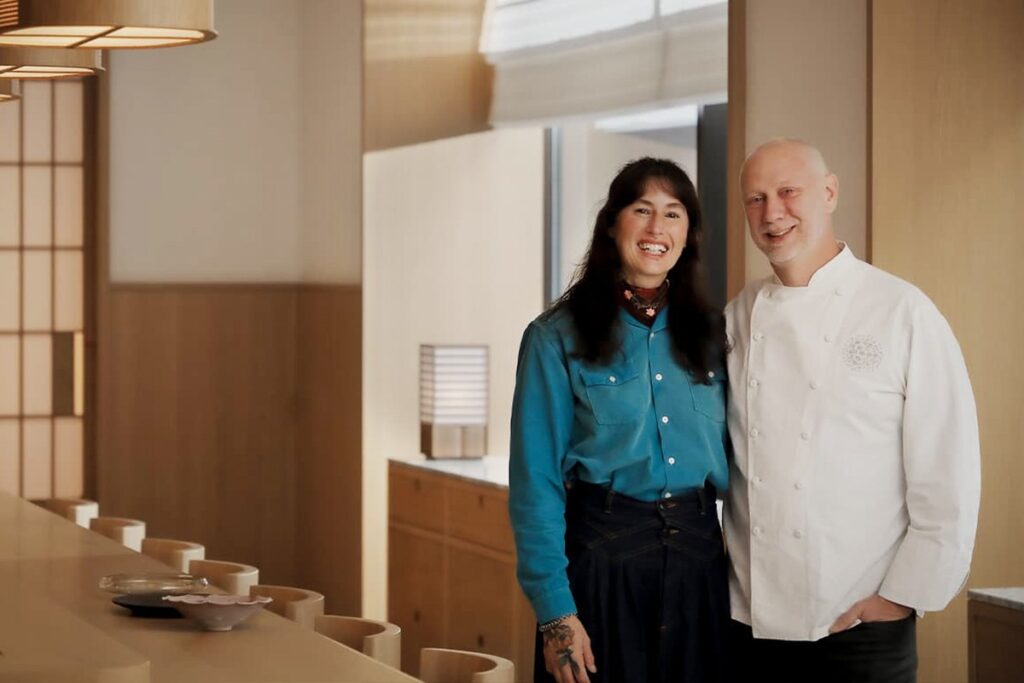
This is an intimate collaboration with three-Michelin-starred chef Kyle Connaughton and Head Farmer Katina Connaughton (above) of SingleThread in Sonoma, California, transforming Kyoto’s finest seasonal ingredients into an exclusive experience that bridges Japan and Sonoma, curated specifically for Capella Kyoto.
Through a contemporary approach to Japanese culinary tradition, the menu at SoNoMa celebrates the regional agriculture and heritage of Kyoto and the Kansai region, thoughtfully interwoven with select seasonal ingredients from Northern California. Under the direction of Chef Keita Tominaga, each experience reflects the ethos of SingleThread, bringing the “Story of Today” to life in every course. Named SoNoMa (想乃間)—a poetic union of thought and space—the restaurant invites a moment of quiet reflection, where Kyoto’s cultural heritage and SingleThread’s spirit converge through seasonality, craftsmanship, and a profound sense of place.
“Capella Kyoto celebrates place through design and experience,” says John Blanco, Cluster General Manager, Capella Kyoto. “We honor Kyoto’s living traditions through Capella Curates—our bespoke cultural Capella Kyoto courtyard—alongside world-class dining and wellness. By transforming a beloved school site, we preserve its history while offering guests deep connections to the artistry and enduring spirit of Japan’s ancient capital.”
In the heart of Gion, Capella Kyoto offers a haven of heritage and harmony. Nestled steps from the revered Kaburenjo theatre—where the timeless arts of geiko and maiko endure—the reimagined machiya (traditional townhouse) opens its doors to deeper cultural understanding.
Here, beside Kenninji Temple, Kyoto’s oldest Zen Buddhist temple, centuries-old artistry lives on through the hands of master craftspeople, thoughtfully reimagined into contemporary forms and experiences. Each moment quietly echoes the soul of a thousand-year legacy.
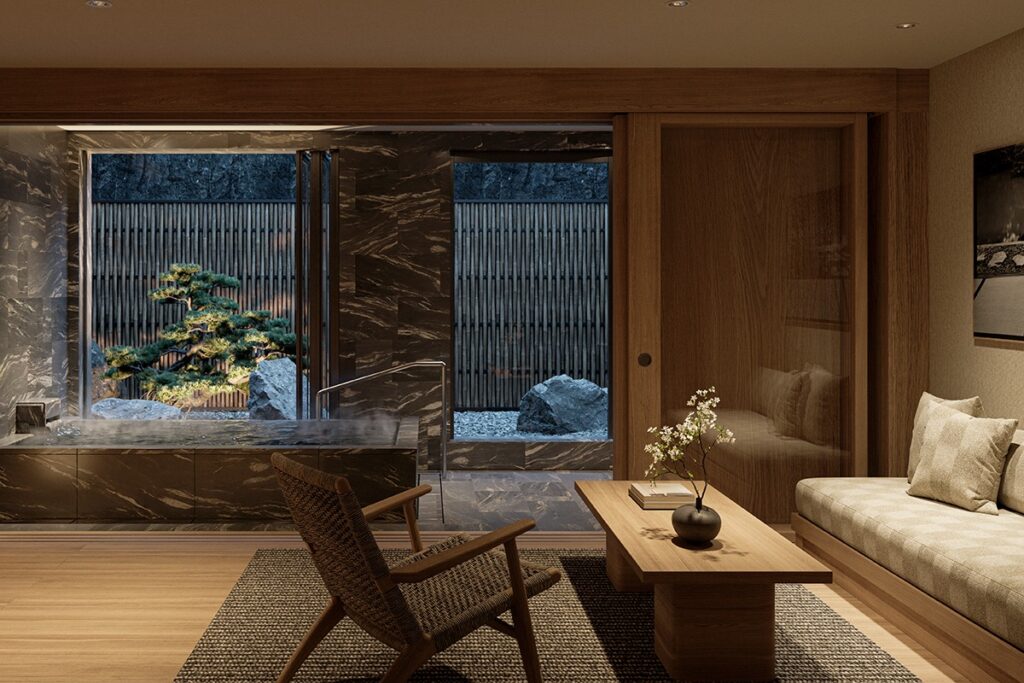
Among 29 suites, six exclusive Onsen Suites offer an experience rare to Kyoto: the timeless ritual of private bathing reimagined for the contemporary traveler.
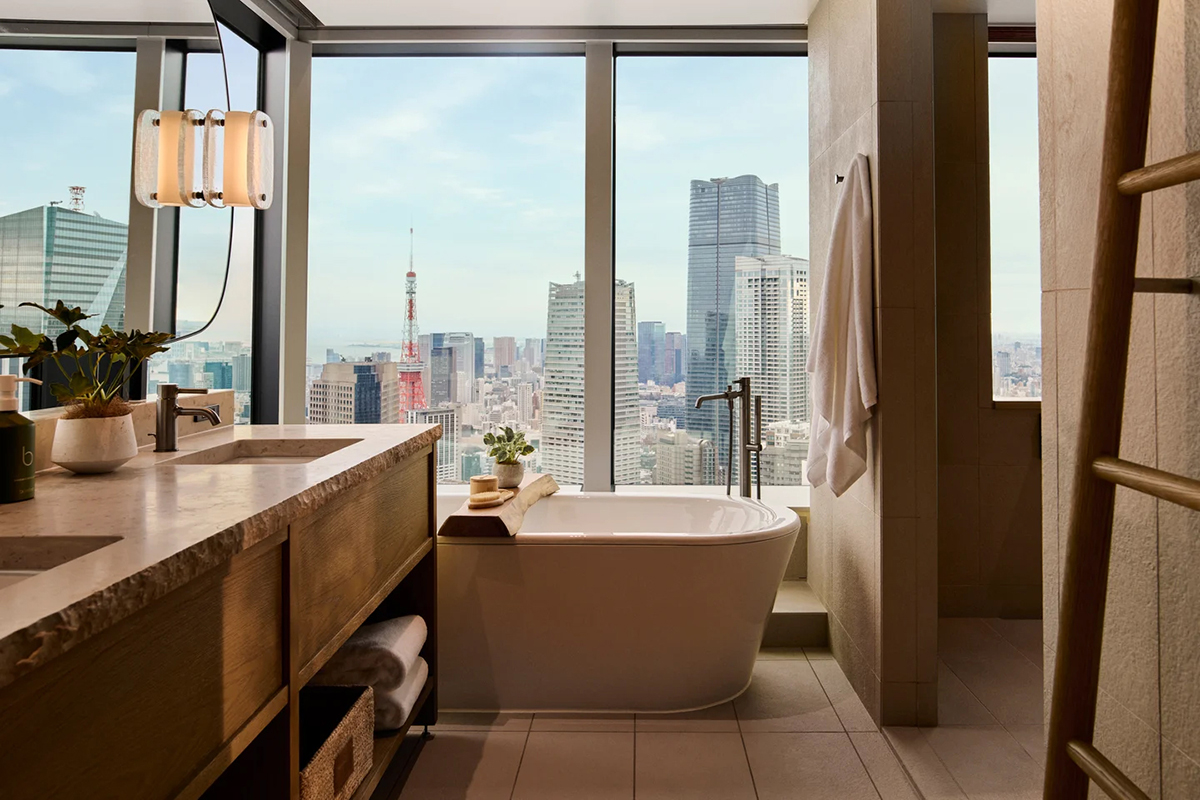
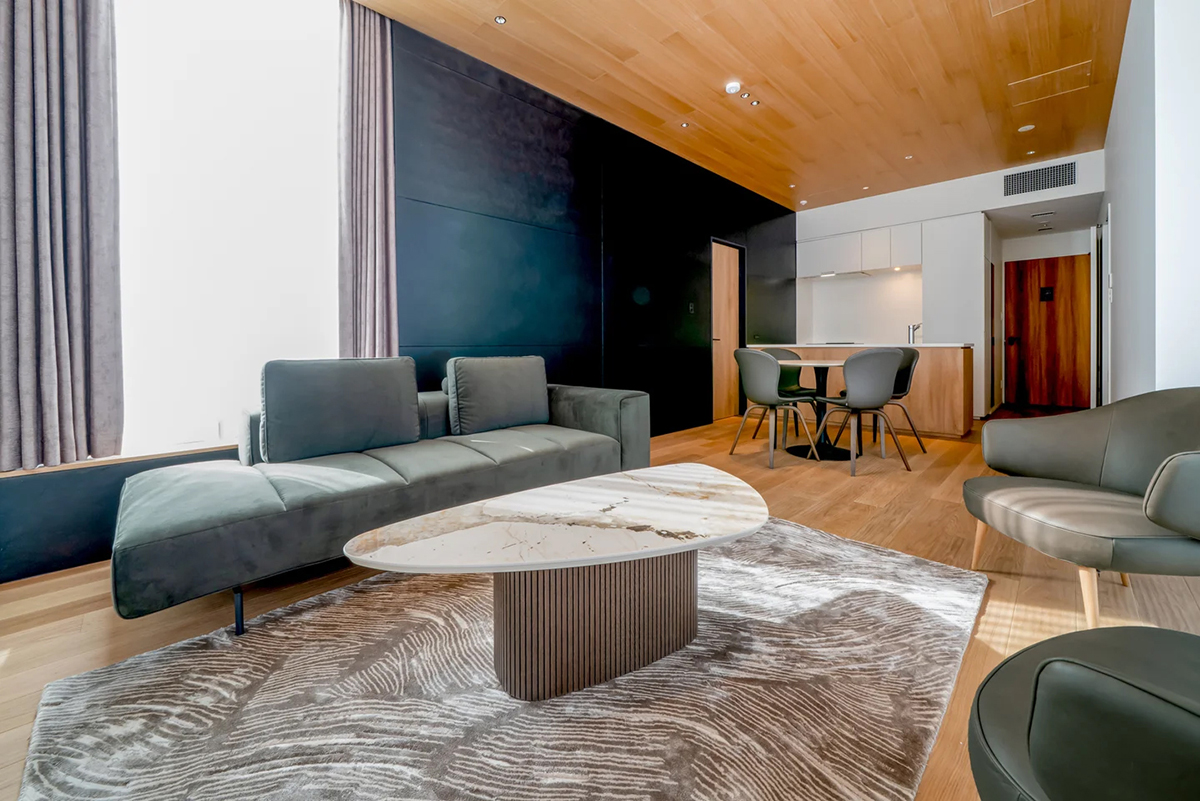
Designed by Kengo Kuma & Associates with Brewin Design Office, each space celebrates the city’s refined heritage through layered textures, soft hues and carefully curated details that echo over 1,200 years of craftsmanship.
Auriga Spa offers a serene haven where time-honored traditions meet modern wellness philosophy. Four intimate treatment suites provide the setting for deeply personalized journeys, each designed with mindful intention.
For profound renewal, retreat to your private onsen room, where the centuries-old Japanese bathing ritual becomes a sacred pause for restoration. Within this thoughtfully crafted space, wellness unfolds not as a destination, but as a gentle return to balance.
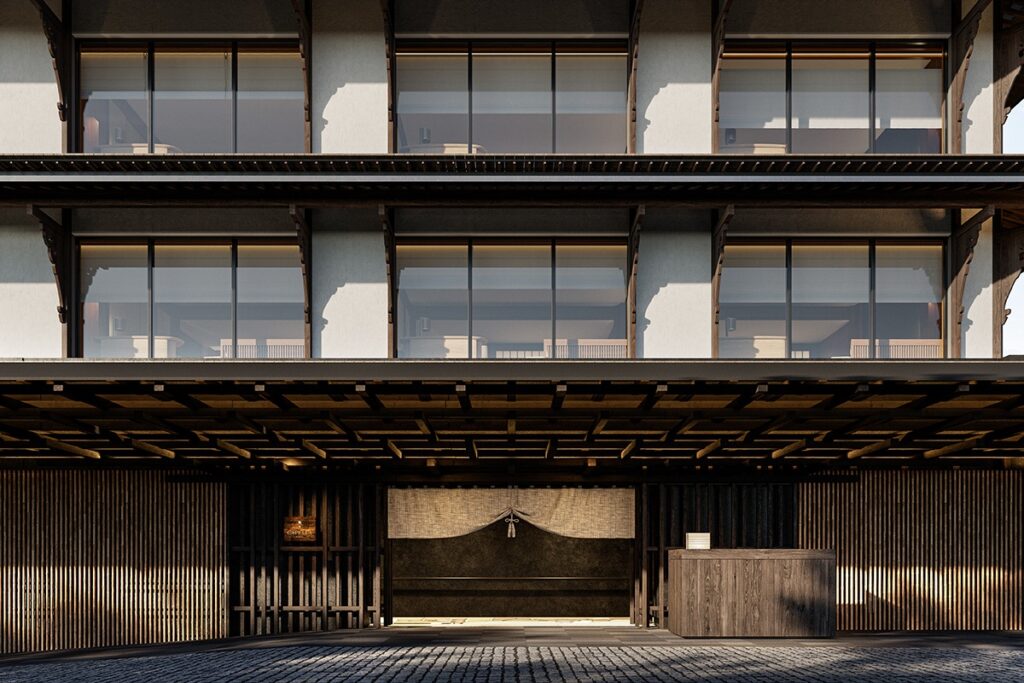
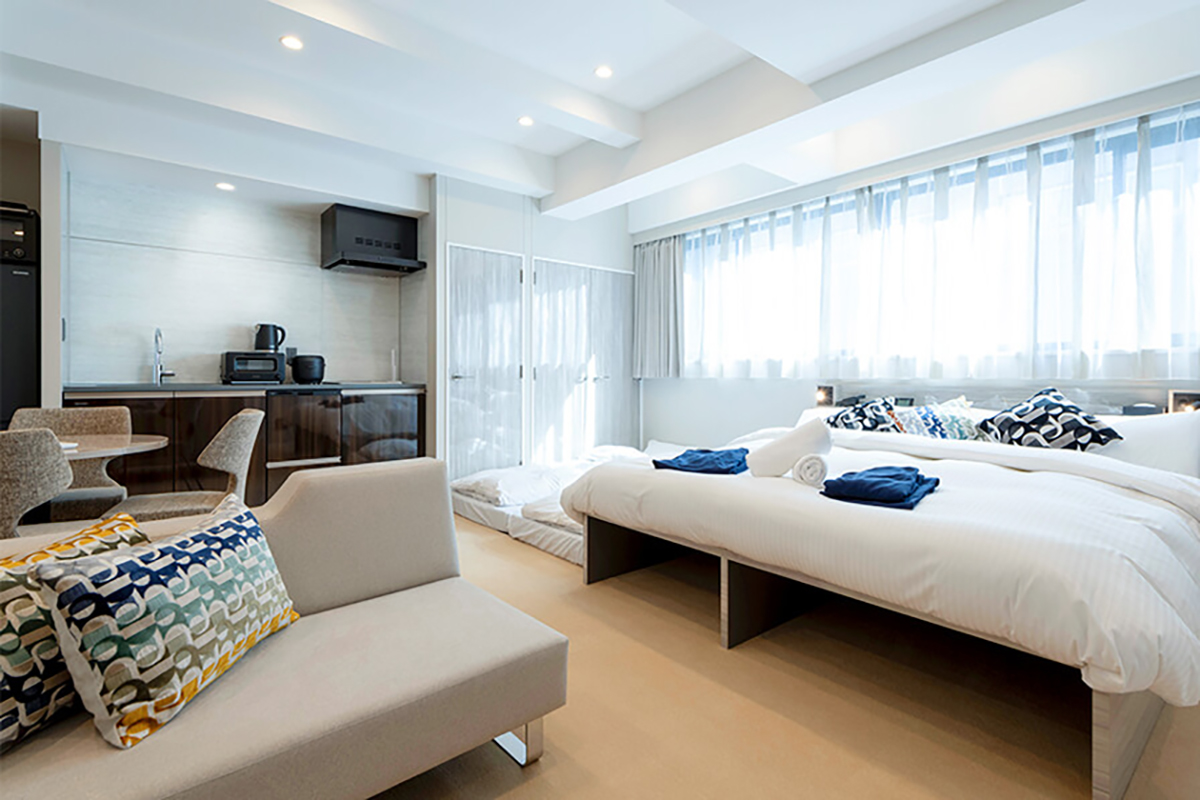
Four stories high and home to 89 rooms, Capella Kyoto pays homage to the city’s rich heritage through its curation of Japanese artworks and artifacts. Each guest room is furnished with soothing hues and intricate textures, reinterpreted in a contemporary manner to embrace the future while respecting the important legacy of Kyoto’s geisha (geiko) traditions. An enchanting space of pure beauty and unexpected treasure awaits.
The design celebrates the traditional machiya—Kyoto’s historic wooden townhouses characterized by narrow street-facing facades, deep interiors and inner courtyards that create intimate, layered spaces between public and private realms. “We sought to capture the essence of Kyoto’s traditional machiya—the progression through thresholds, the play of light and shadow, the deliberate reveal,” explains Robert Cheng, Founder & Principal, Brewin Design Office. “Each space invites pause and contemplation, honoring the Japanese principle of ma—the meaningful interval between moments.”
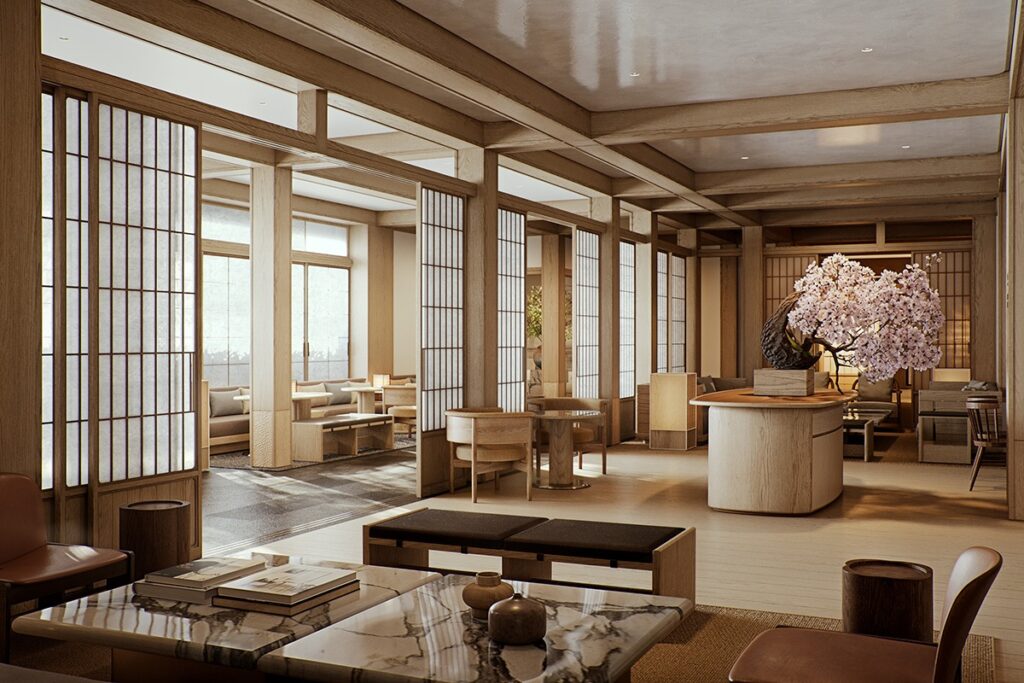
The journey begins through a Gion-style alleyway lined with shoji screens, leading to a modern chamber featuring shimenawa rope motifs that mark the boundary between secular and sacred realms. Beyond this threshold, a vestibule reveals tokonoma alcoves framing traditional byōbu screens alongside contemporary local artworks—a dialogue between past and present. Here, guests are invited to pause before choosing their path: one leads to the signature restaurant, evoking a traditional ochaya teahouse; the other to the Japanese restaurant, where reclaimed wood from the former Shinmichi Elementary School glows beneath repurposed lamps, honoring the site’s heritage.
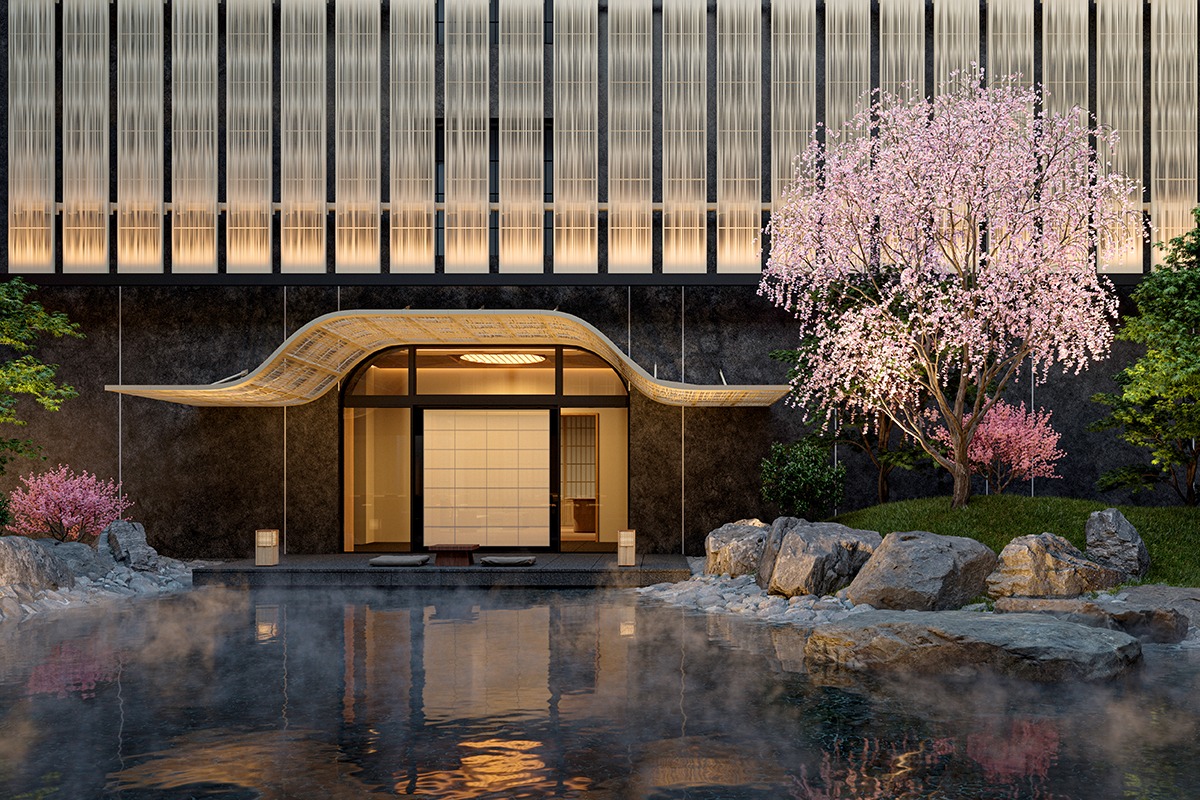
The sound of falling water accompanies guests along a corridor to the central courtyard, crowned by a dramatic karahafu roof—an undulating gable typically used in temple gates, castles and other buildings of ceremonial importance— and later adopted by kabuki theatres and Kaburenjo dance halls. This architectural centrepiece rises above an open-air performance space where tradition meets modernity.
Further along, the French brasserie opens onto a tranquil tsuboniwa moss garden, the courtyard sanctuary that preserves the cherished sakura tree from the original site.
Capella Kyoto offers three Capella Curates experiences with rare access to Kyoto’s living traditions, curated exclusively for hotel guests. Each journey connects travelers with master artisans and cultural practitioners, revealing centuries-old crafts and treasured customs. Whispers of Miyagawa-cho Experience the refined world of Kyoto’s geiko and maiko in an intimate private ochaya, the exclusive teahouses of Gion. A maiko performs traditional dance with grace honed through years of training, accompanied by the haunting melodies of the three-stringed shamisen.
This rare encounter with Gion’s closely guarded traditions reveals an art form preserved across generations. Visit a 150-year-old atelier where craftspeople create geta—traditional elevated wooden sandals. This is an intimate session where guests observe craftsmanship and try on different styles of beautifully crafted geta. Through conversation, the proprietor—craftsman, storyteller and philosopher—shares centuries-old wisdom about these iconic sandals and their role in balance, posture and well-being, while learning about each guest. This exchange allows him to craft truly personalized geta for those who wish to commission a pair. Step into the timeless world of urushi—Japanese lacquerware treasured for more than 9,000 years. At the atelier of a multi-generational master, learn the meticulous art of harvesting and refining sap from the lacquer tree. Visit a nearby temple where urushi (lacquer) has adorned sacred objects for centuries. Then, conclude with a hands-on workshop creating your own urushi bowl and chopsticks or repairing pottery using the kintsugi method—the art of mending with lacquer and gold. Leave with a keepsake infused with spirit, craftsmanship and the quiet beauty of impermanence.