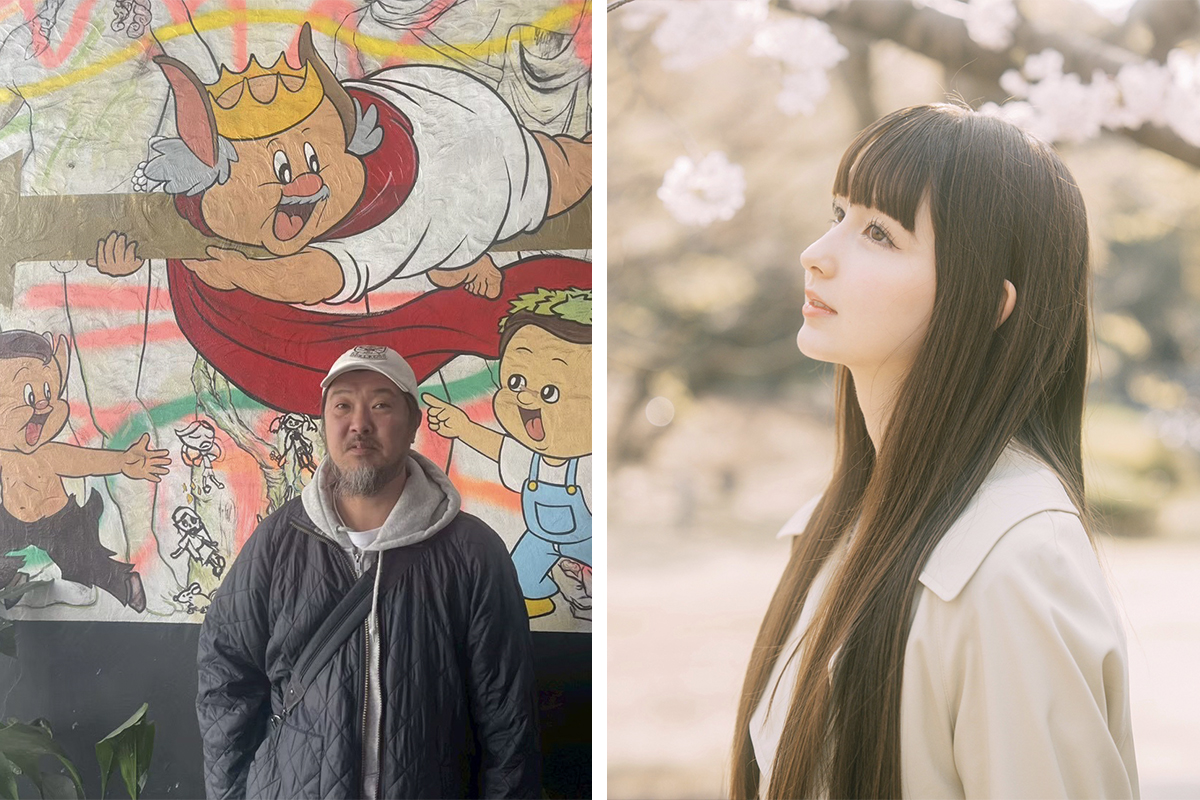
Above: Takumi Ueda and Giselle AIka
The ASUE Charity Art Auction at a glance:
- December 2–5
- 11am–7pm
- Daikanyama Hillside Terrace Building, Tokyo
- Free admission
- Sign up to place private bids in-person or via ASUE online portal
“Art is the great democrat.”
To this day, art is produced around the world, from the hands of professional and amateur, man and woman, child and adult. It is, perhaps uniquely, the one form of expression that anyone may access. And the key sentiment behind this quote is that it should remain so, as it communicates without distinction for your place in life — every experience is unique and deserves a chance to be expressed.
But Japanese artists have faced a significant hurdle in recent times towards living these ideals. Gallery costs, exhibitions and travel expenses are restrictive to young artists aiming for visibility, and the art world increasingly becomes a question of subsidy over skill.
The ASUE Charity Art Auction rejects this change. Built on the concept of “Art Democracy,” its goal is to realize the essence of art: a source of expression for all. But beyond that, Art Democracy is a message to the next generation of burgeoning Japanese artists — that wherever they are from, or whatever the experiences that push them to create, it will be supported and showcased, as all such art should be.
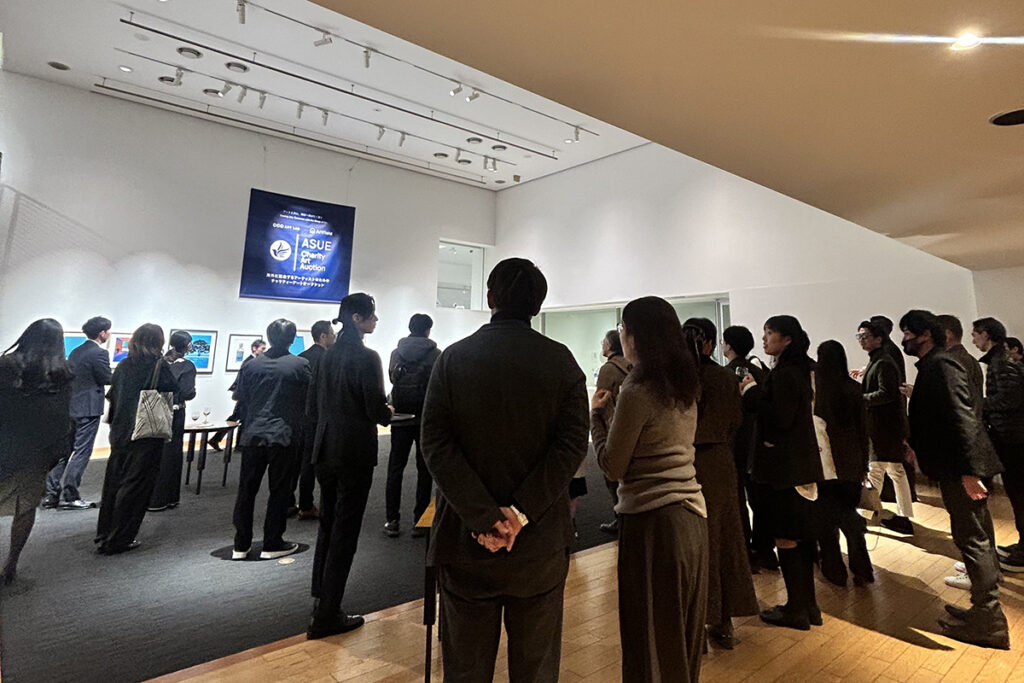
The ASUE Charity Art Auction Experience
The ASUE Charity Art Auction is an art exhibition and auction taking place on December 2-5 at the Daikanyama Hillside Terrace Building. Attendees will move in small, intimate groups through the minimalist gallery, experiencing contemporary art curated by ASUE from evolving Japanese artists. Curators will be on hand to answer questions and explore the background and philosophy of the pieces on display, and guests may also join private guided tours, live painting tutorials or artist seminars. The event is open to the public, supporting its ideals of keeping art open to all, and the organizers stress they want new arrivals to the art world to explore the world of art, and first time buyers to experience the joy of owning their own pieces.
To foster this, the exhibition is also a silent auction during the reception period. Guests may offer bids in private for pieces which move them personally, ensuring the atmosphere of the gallery remains quiet and contemplative. The choice is a subtle reminder of ASUE’s commitment to Art Democracy as a message to artists that their pieces will be valued on the emotions they stir.
Voice of the Artists
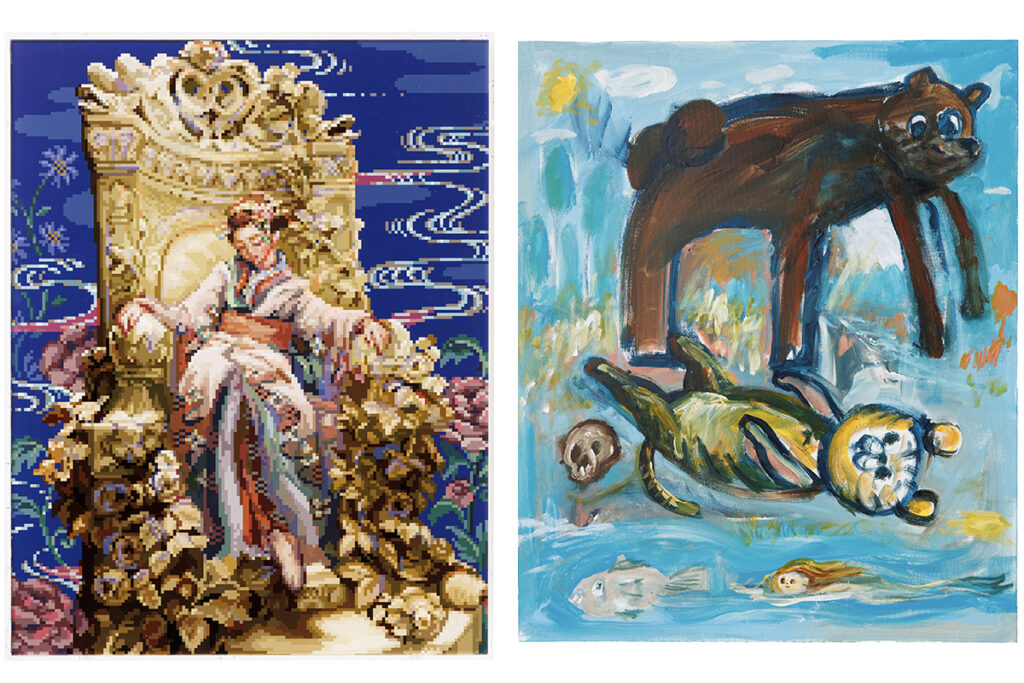
Among the artists is Giselle Aika, a Japanese who has developed her art through a childhood in Brazil. Her exhibition piece draws heavily from German culture and the legend of Sleeping Beauty, expressed through the contemporary medium of pixel art. She explains her connection to her piece as a cultural link:
“I conceptualised this piece from an experience I had studying in Berlin. Sleeping Beauty is a German fairy tale and yet it is known around the world. I saw a statue of her in the city, and it amazed me how detailed it was, but also how the story communicates something that transcends language.”
“I wanted to highlight that translation through culture, which is why my piece uses traditional Japanese water patterns. It conveys that essence of a story that exists regardless of time or language.”
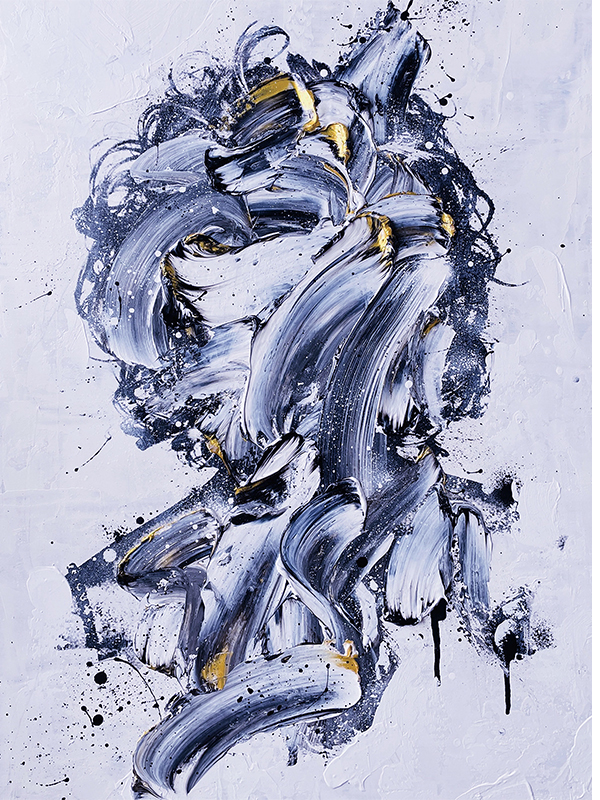
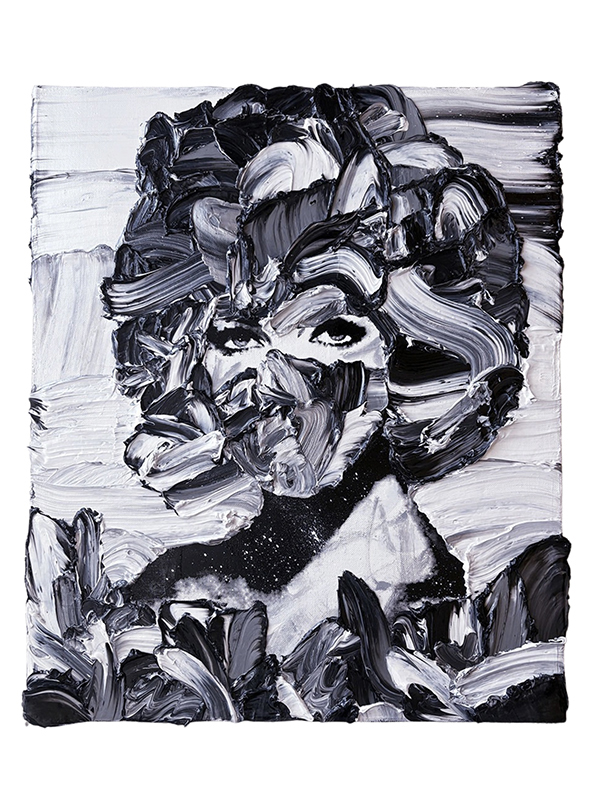
Meanwhile, another exhibited artist, neunoa, offers their piece, a portrait of Dame Elizabeth Taylor through the lens of history. They choose to showcase their work as a means of questioning the viewer on the ideals of beauty and aesthetics:
“Elizabeth Taylor was known for her beauty and used her fame to support people living with HIV. I was inspired by the beauty I saw in the way she lived her life and created this portrait of her,” they explain.
“I entrusted the light and shadow of her life to the white and black tones that obscure her face, and its depth to the thick layers of paint. Through her gaze that seems to look back at the viewer, I ask what true beauty really is.”
The Artists on Art Democracy
When asked about ASUE’s mission of Art Democracy and how they resonate with it personally, both artists expressed their belief that fostering new Japanese talents is vital to ensure the next generation have access to equal opportunities in the art world. Giselle expresses it through her own experiences: “When I was a high school student, I spent a lot of time at home by myself, and felt a deep loneliness as I saw time pass by without changes. It drained me of confidence in my artwork as well, since I found very little support or validation,” she reminisces.
“The impetus for me to grow was when I was awarded a prize for my pixel art, and the resulting boost of confidence. That is what I want new artists to experience, the cycle of seeing themselves triumph, and then contributing to the next generation.”
On the other hand, neunoa returns to the core of democracy, and a similar cyclical concept to Giselle’s that is essential for enabling new talent to shine: “We understand the democratization of art as creating opportunities for everyone, regardless of status, knowledge, or experience, to engage with artworks through their own sensibility, consider their value, and participate in the art world,” they emphasize.
“For diverse works with social and cultural significance to continue to emerge, it is essential that people have opportunities to encounter and support them. Viewing and purchasing artworks supports artists in taking on new challenges, while artists, through their creative expression, contribute to society and culture. Establishing this cycle is crucial to sustaining a vibrant artistic ecosystem.”
Artist Takumi Ueda considers how the results of Art Democracy are also seen in the relationships it helps cultivate between artists: “I believe it is essential to open up the foundations of art to as many people as possible. I see Art Democracy as an attempt to build small, lasting relationships of trust. Within a system in which artists support artists, if I can contribute to creating an environment where all three parties can support one another through artworks I feel that it would also give a little more meaning to my own artistic practice.”